
Beach Access Mats
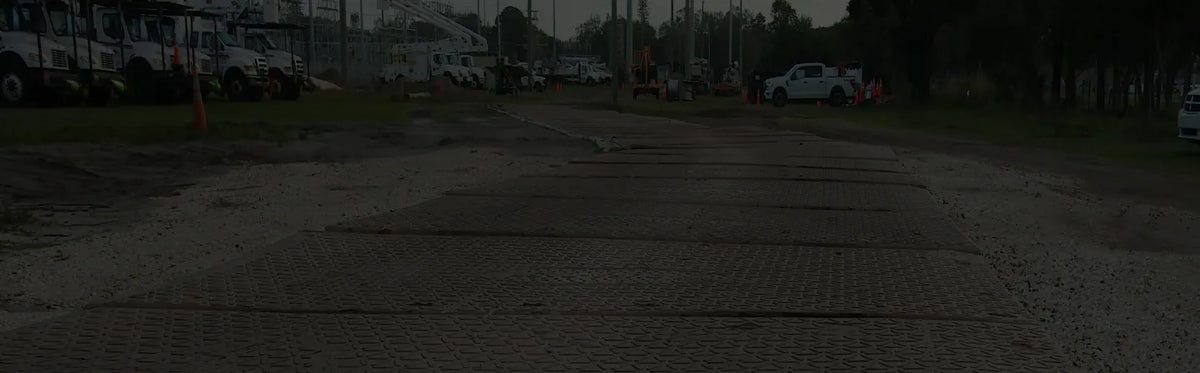
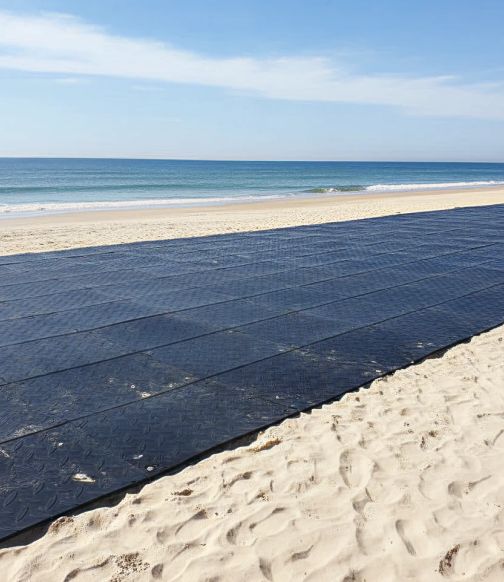
Sandy terrain, tidal flats, and coastal job sites all share the same challenge: soft, shifting ground that swallows equipment, stalls operations, and blocks access for people with mobility needs. PrimaMat's beach access mats give you a firm, stable surface you can deploy fast, whether you're running a coastal construction project, staging an outdoor event, or building a compliant accessible pathway to the water's edge.
Need help choosing the right products?
Request a QuoteBuilt for Coastal Conditions and Heavy Use
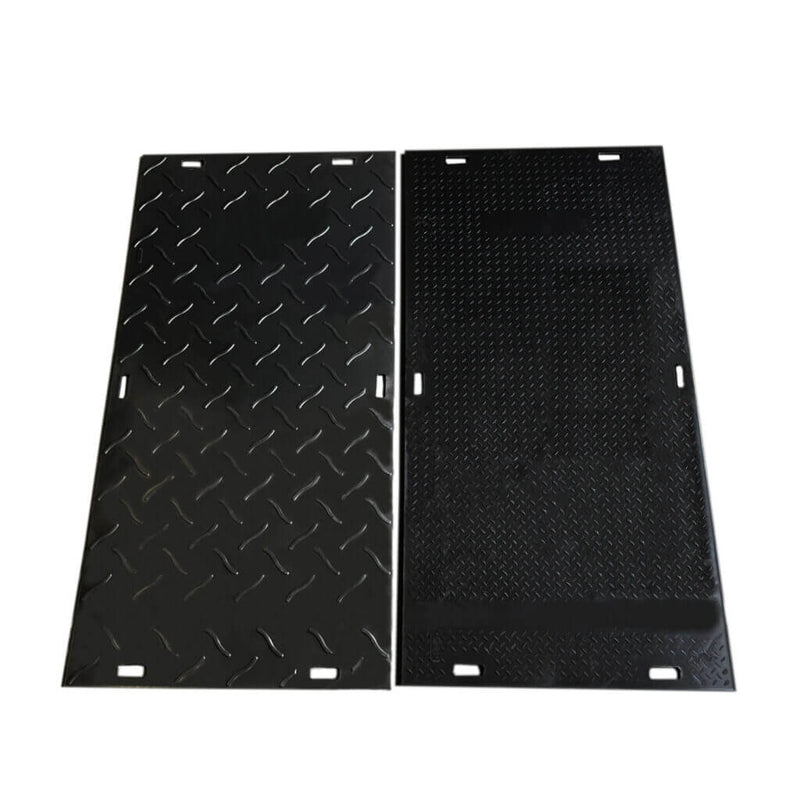
We engineer our mats from 100% recycled HDPE, a material that won't absorb water, rot, warp, or corrode when exposed to saltwater, UV radiation, and constant beach conditions. While standard plywood buckles and swells, PrimaMat panels hold their shape and load-bearing capacity day after day.
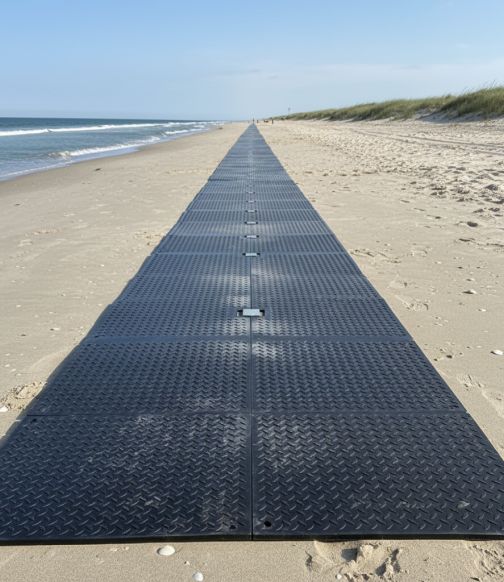
Every mat connects securely with our steel connectors, so you can build continuous access roads, pedestrian walkways, and equipment platforms across sand without anchoring, excavating, or modifying the site. When the job is done, the mats come up just as fast as they went down.
Ground Protection Mat Calculator
Use the calculator to enter your site’s length and width in feet. Select the mat size you intend to use. The tool will return your estimated mat quantity based on total square footage and layout configuration.

Enter your area, mat type and yearly plywood spend to see your numbers.
- Plywood (cumulative)
- PrimaMat (one-time)
- Your savings
View as table
| Year | Plywood | PrimaMat | Savings |
|---|
Estimate only. Assumes your PrimaMat mats are reused for the whole period (customers like Baun Landscapes still use 8-year-old mats). Excludes taxes, shipping and connectors.
Who Uses PrimaMat Beach Access Mats
PrimaMat beach access mats serve numerous uses where soft, coastal terrain creates real operational problems. From heavy equipment staging to public accessibility compliance, the right matting solution depends on what you're building, hosting, or managing and how long you need it in place.
Construction and Utility Contractors
Coastal excavation, seawall repair, marine construction, and beachfront development all require stable access for heavy machinery. PrimaMat panels distribute equipment loads across soft sand, protecting the sub-surface and keeping your crew moving.
Event Organizers
Beach festivals, destination weddings, corporate retreats, and public events need safe walking surfaces for guests, staff, and service vehicles. Our portable beach access mats set up without permits or permanent installation, and they pack out cleanly after the event.
Municipalities and Public Venues
ADA beach access mats create compliant pedestrian pathways that serve wheelchair users, people with mobility aids, strollers, and all beachgoers. Providing accessible routes to the waterline is a legal obligation and a public service, and PrimaMat makes it achievable without costly construction.
Why HDPE Outperforms Every Other Option on the Beach
Sand is an unforgiving substrate. It shifts under load, scours surfaces, and accelerates deterioration in materials that weren't built for it. HDPE stands apart because it:
- Resists saltwater and chemicals: No corrosion, no swelling, no breakdown from tidal exposure or cleaning agents.
- Holds up under heavy equipment: PrimaMat panels support significant load-bearing demands, making them viable for tracked machinery, service vehicles, and crowd loading.
- Stays cooler underfoot: Unlike metal alternatives, HDPE doesn't absorb and radiate as much heat, which matters in barefoot beach environments.
- Cleans easily: Sand, salt, and debris rinse off without staining or residue.
Portable Beach Access Mats for Sale in Multiple Sizes
PrimaMat offers beach access mats for sale in configurations suited to different coverage needs:
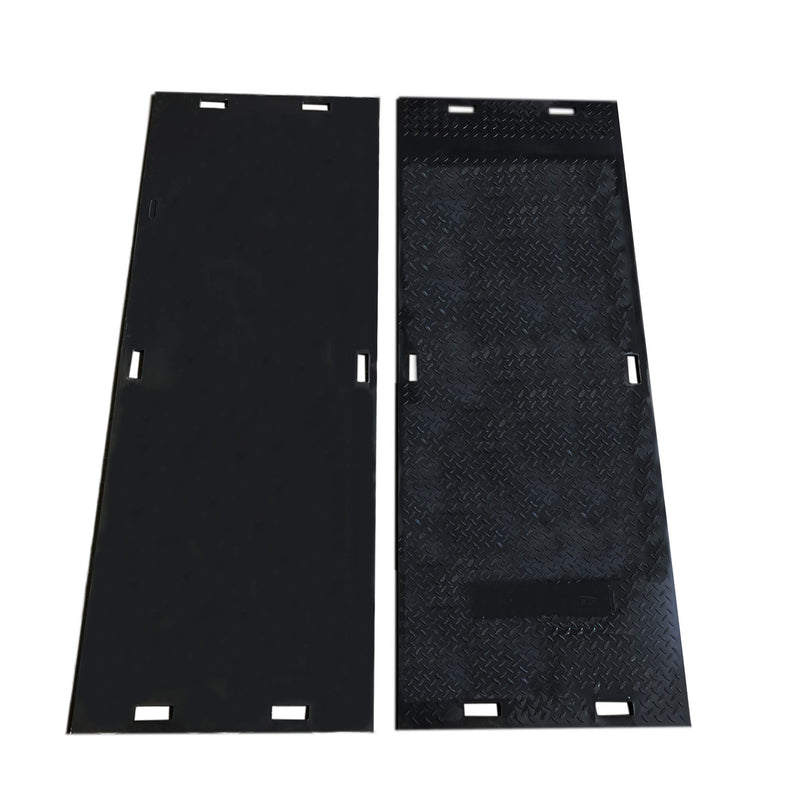
- 3' x 8' Mats: Ideal where manual handling and tight access corridors are priorities. Their lighter individual weight makes repositioning easier for smaller crews.
- 4' x 8' Mats: The broadest-use option. Covers more area per panel and handles everything from pedestrian pathways to heavy equipment platforms.
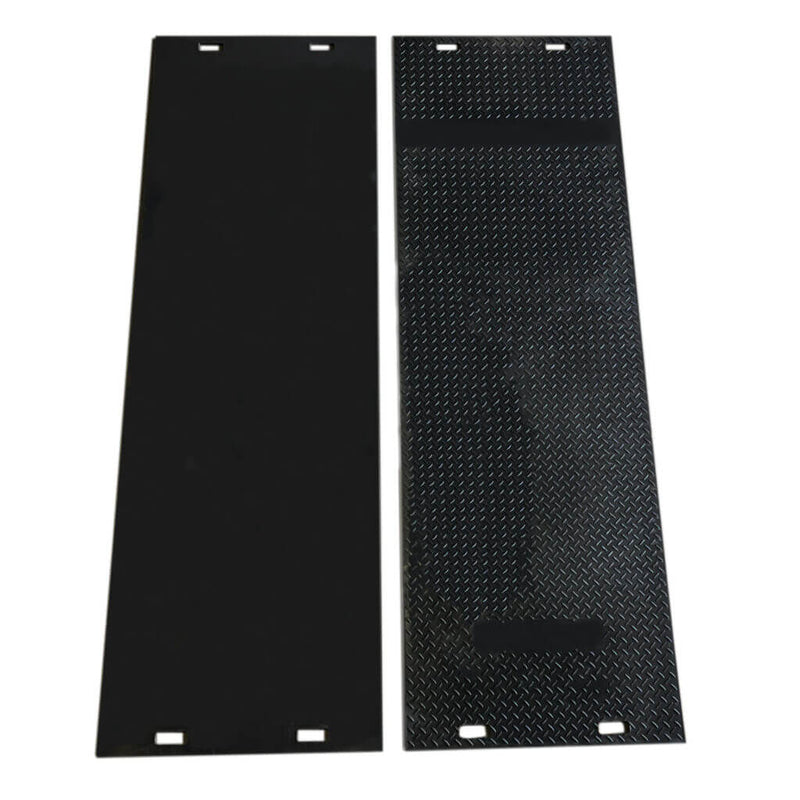
- 40" x 10' Track Mats: Designed for tracked machinery and vehicles, these panels are ideal for coastal construction access roads.
All mats include integrated handles for easier carrying and connect with steel hardware that holds panels flush against shifting sand surfaces.
Frequently Asked Questions
Can PrimaMat beach access mats be rented instead of purchased?
PrimaMat sells mats directly rather than operating a rental program. For event organizers and contractors with recurring coastal projects, purchasing is typically more cost-effective in the long term, since HDPE mats last well over a decade under normal use conditions. If you're comparing purchase versus rental pricing from other suppliers, contact our team, and we'll walk you through the numbers for your specific project scope.
Do I need a permit to install temporary beach access mats on a public beach?
Permit requirements vary significantly by state, county, and whether the beach is publicly or privately managed. Most jurisdictions classify portable, nonanchored matting as temporary equipment rather than a permanent installation, which typically bypasses standard construction permitting. However, some coastal areas governed by the Army Corps of Engineers or state environmental agencies require notification or approval even for temporary surface coverage. Always confirm with your local beach authority or parks department before deploying mats on public coastal land.
How do PrimaMat panels perform on wet sand versus dry sand?
Both conditions are manageable, but the behavior differs. Dry sand compresses under load, so mats distribute weight across a broader footprint, reducing sinkage. Wet or saturated sand near the tide line is more fluid, which means panels may settle slightly more on initial placement, but the interlocked system prevents individual panels from shifting or separating once connected. The diamond-tread surface on our mats maintains traction in wet conditions for both foot traffic and wheeled equipment.
Related Articles
-
 How to Select the Best Ground Protection MatsDiscover important considerations for choosing the right mat for your application.Read article →
-
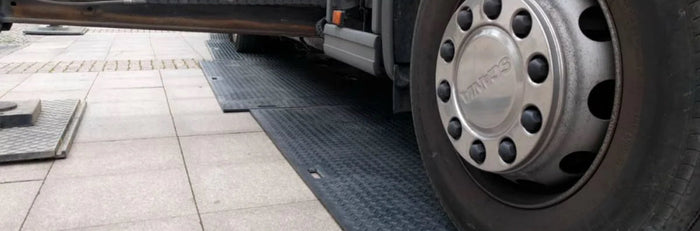 Ground Protection Mat Capabilities: The Ultimate Guide to Durable SolutionsExplore the many rugged applications for our ground protection mats.Read article →
-
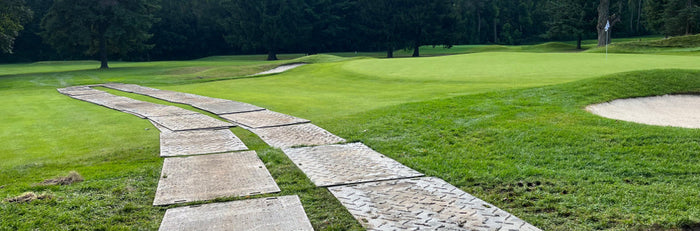 7 Reasons to Use Ground Protection Mats in High-Traffic AreasSee how our ground protection mats can make a difference in your high-traffic setting.Read article →
