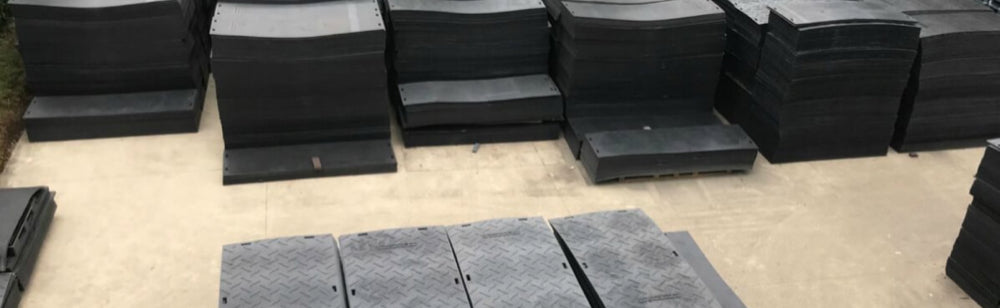
Preventing surface damage is a constant priority on busy jobsites and event grounds. Heavy equipment, trucks, and even repeated pedestrian traffic can quickly turn stable terrain into rutted mud, cracked pavement, or compacted soil that no longer drains properly. That’s where ground stabilization comes in.
Ground protection mats serve as engineered platforms that distribute weight across a wider area, reducing pressure on the surface below and helping to keep sites safe, level, and usable for an extended period.
In this guide, we’ll break down how weight distribution actually works, how mats protect specific surfaces like grass, soil, and pavement, and what to consider when choosing mats for heavy-duty applications.
The Science Behind Weight Distribution and Ground Stabilization
At its core, ground protection is a physics problem. Pressure is simply force divided by area. When the full weight of a crane, truck, or lift rests on a few small contact points (tires, outriggers, tracks), all that force is concentrated into a small footprint. The result: deep ruts, soil displacement, and in some cases, equipment sinking or tipping.
Ground protection mats change that equation. By placing a mat between the surface and the load, the force is spread across the entire surface area of the mat rather than just the tire or outrigger pad. The larger the area, the lower the pressure on the ground beneath. This:
- Reduces rutting and sinking
- Limits soil deformation and erosion
- Helps keep the equipment level and stable
Modern mats—such as PrimaMat’s weight distribution mats—utilize high-density polyethylene (HDPE) and engineered tread patterns to provide grip for both equipment and workers, while contributing to overall ground stabilization efforts across the jobsite.

How Mats Protect Grass, Soil, and Pavement
Different surfaces fail in different ways, so understanding what’s happening underneath your mats is key.
Grass and Turf
Natural turf is highly sensitive to soil compaction prevention. When soil particles are pushed tightly together, water and air can’t move freely, root systems suffocate, and turf dies off. Ground protection mats distribute weight to keep pressure below the threshold that causes deep compaction. They also form a barrier between tires and the root zone, helping preserve vegetation and reducing the need for costly turf restoration after events or construction work.
Exposed Soil and Soft Ground
Unpaved access routes, rights-of-way, and work pads are especially vulnerable. Heavy traffic can cause:
- Rutting and trenching
- Loss of topsoil
- Erosion during rain events
By spreading loads over a much larger area, ground protection mats provide ground stabilization across these soft zones. They act like temporary, modular roadways that keep vehicles moving and reduce the risk of getting stuck, which is a major driver of delays and incident response costs.
Pavement, Pavers, and Finished Surfaces
Paved surfaces and decorative hardscape aren’t immune to damage. Concentrated loads can cause asphalt to crack, chip concrete edges, and shift pavers. Ground reinforcement mats serve as shock absorbers, spreading the load so each stone or slab sees less force. That helps preserve existing infrastructure and prevent the kind of damage that leads to insurance claims, unhappy property owners, and unplanned repairs.
Ground Stabilization and Soil Compaction Prevention
Beyond visible damage, one of the biggest risks is what happens below the surface. Excessive compaction and displacement can:
- Reduce drainage and increase standing water
- Harm root systems and vegetation
- Destabilize foundations for temporary structures
Using mats as part of a soil compaction prevention strategy helps protect sensitive environments and ensures better compliance with environmental regulations that limit disturbance in protected or private areas.
For long-term projects, this isn’t just about protecting today’s schedule. It’s about avoiding restoration costs that can easily exceed the initial cost of deploying mats.
If you’re planning work in environmentally sensitive or high-traffic areas, it’s worth exploring PrimaMat’s full range of ground protection mats for sale so you can match the right mat to each surface and load profile.
Choosing the Right Mats for Heavy Equipment
All mats aren’t created equal. Light-duty panels used for pedestrian walkways are very different from the heavy-duty platforms needed under cranes or large trucks. Industry guidance typically classifies mats as light, medium, or heavy duty based on expected loads, ground conditions, and usage frequency.
Here are a few key considerations for heavy equipment ground protection:
Load Type and Weight
Look at both the total machine weight and how that weight is distributed (number of tires, tracks, or outriggers). Peak loads at contact points are what matter most for mat selection.
Ground Conditions
Soft, saturated, or mixed terrain (for example, transitions between gravel and grass) demands stronger mats with better structural integrity to bridge uneven areas.
Frequency and Duration of Us
Daily use on a long-term industrial site will wear mats differently than occasional access for a weekend event. Heavier-duty composite or HDPE mats often deliver lower lifetime cost for recurring use.
Handling and Installation
Some heavy-duty mats now combine high load capacity with enough portability for crews to move them by hand, reducing the need for extra equipment during setup.
If your work regularly involves cranes, aerial lifts, or other large machinery, consider reviewing PrimaMat’s industrial heavy equipment ground protection resources to help match your load and application to the right product.
Real-World Applications for Ground Protection Mat
Ground mats play a central role in many projects where ground stabilization and safety go hand in hand:
- Construction Sites – Temporary access roads, crane pads, and staging areas that keep heavy equipment out of mud and off delicate surfaces.
- Events and Festivals – Walkways, ADA routes, and equipment paths that protect turf while keeping guests safe and dry.
- Utility and Infrastructure Work – Right-of-way access over private property and environmentally sensitive areas with minimal disturbance.
- Disaster Response and Emergency Access – Rapid deployment of stable routes and platforms on flooded or unstable ground.
Across all of these scenarios, high-quality mats help crews maintain productivity while protecting people, equipment, and the environment.
FAQs About Ground Protection Mats
The $1.1 trillion events industry can be challenging to navigate, but PrimaMat is a tried and trustworthy source of the information you need. Read the following questions for the temporary event flooring answers you've sought.
What are common applications for ground protection mats?
Ground protection mats are used anywhere heavy equipment, vehicles, or high foot traffic could damage the underlying surface. Common applications include temporary access roads, work pads for cranes and lifts, event flooring over turf, utility right-of-way access, and stabilized walkways in wet or unstable conditions. In each case, the goal is reliable ground stabilization that keeps operations moving without leaving a damaged site behind.
How much weight can ground protection mats support?
Load capacity depends on the mat’s material, thickness, internal structure, and the ground conditions beneath it. Many composite and HDPE mats are rated to support fully loaded trucks and heavy construction equipment when used on appropriately prepared surfaces, with some systems handling loads in excess of 100 tons under ideal conditions. Always check the manufacturer’s specifications, and remember that softer ground requires more conservative loading to maintain safety.
Can ground protection mats be used on uneven terrain?
Yes. Quality mats are designed to follow mild ground contours and can be laid over uneven or mixed surfaces, such as transitions between grass, gravel, and pavement. On steeper slopes or sharply irregular terrain, best practices may include anchoring mats, overlapping panels, or pairing them with additional stabilization measures to prevent shifting and maintain a level working surface.
Related Articles